
Ordered is not received
Lifecycle stages preserve the operational difference instead of flattening it into one status.
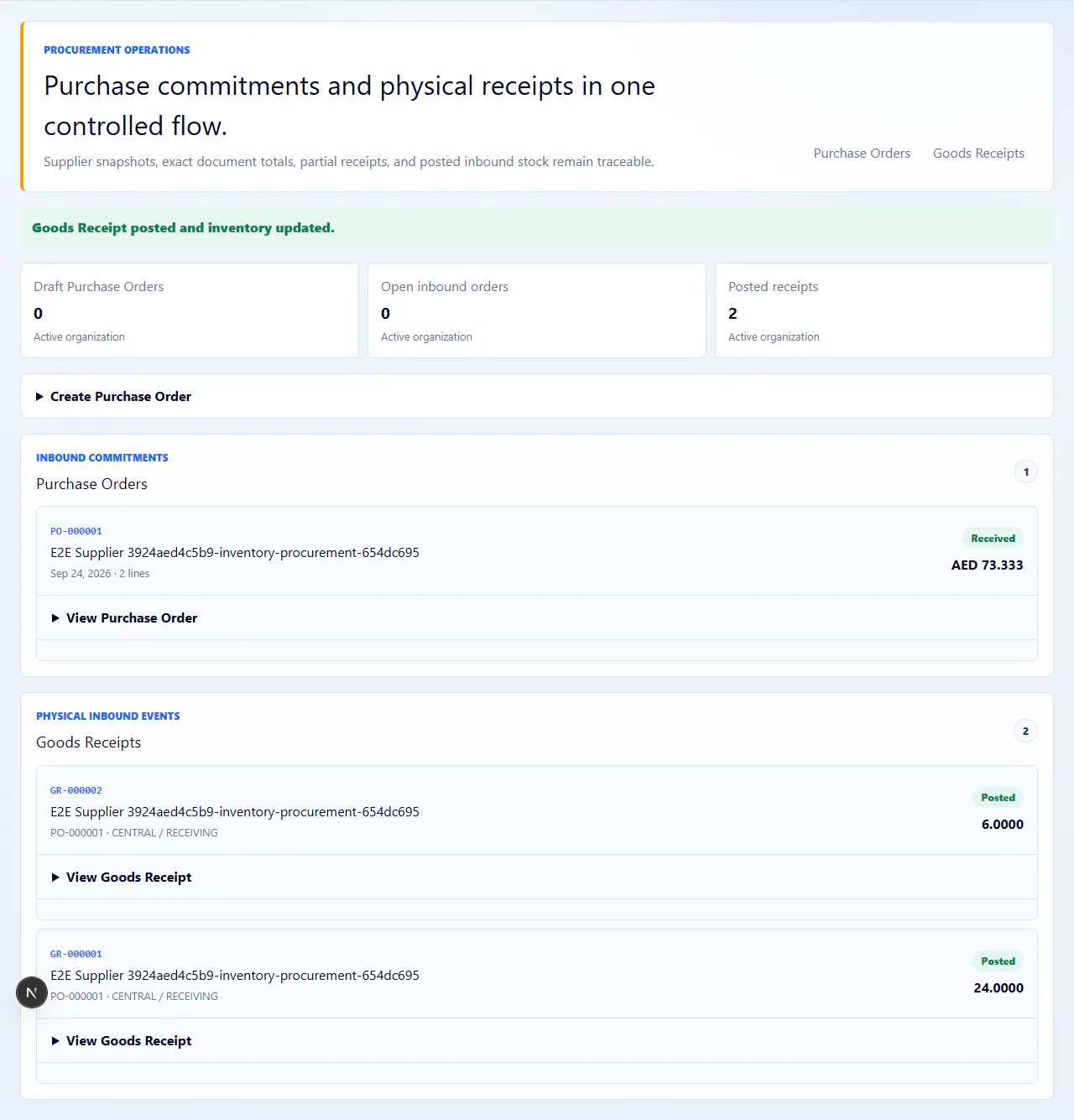
From supplier commitment to available stock
Connect suppliers, purchase orders, goods receipts, warehouse locations, and stock movement so quantity changes have an attributable source.
The workflow problem
Teams need a visible distinction between what was requested, what a supplier committed, what the warehouse received, and what became available. Zivanox keeps those stages separate while linking them through one traceable procurement path.
Connected execution
Each stage has a specific responsibility, source, and accountable transition.
Use a canonical supplier record and accountable purchasing context.
Define products, quantities, costs, destination, and lifecycle state.
Record the accepted quantity against the source order and warehouse.
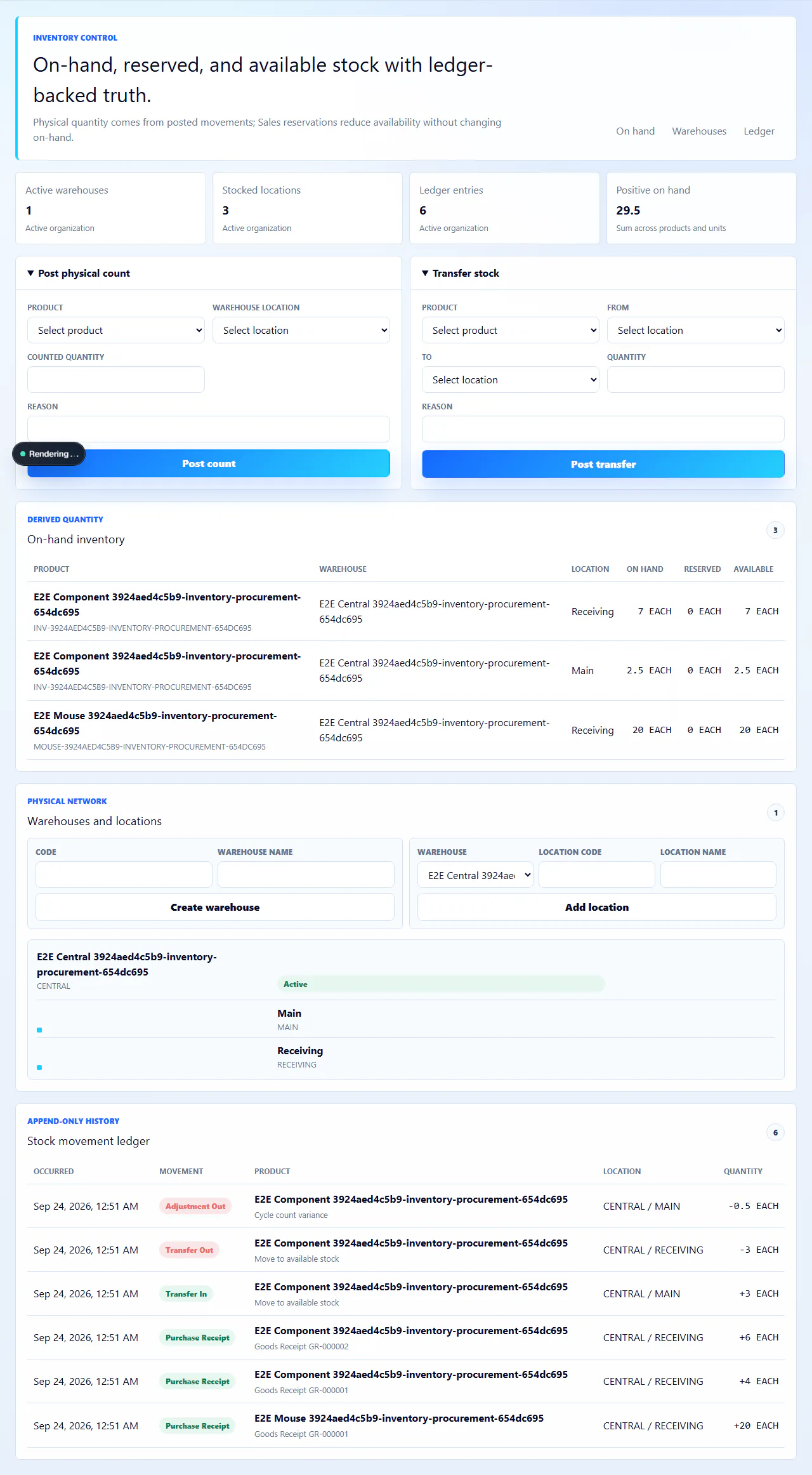
Create movement history attributable to the receiving event.
Keep the supplier commitment and receipt available to downstream financial work.
Verified product evidence
These images come from the accepted Zivanox application using isolated synthetic data.
Operational outcomes
The value comes from accountable records and clearer transitions, not an unsupported performance promise.
Lifecycle stages preserve the operational difference instead of flattening it into one status.
Inbound quantity carries purchase-order and goods-receipt context.
The destination warehouse and location remain part of the receiving record.
Who evaluates this workflow
For teams controlling supplier commitments and purchase-order progression.
For teams that need received stock to match an approved operational source.
Related modules
Practical resources
Controlled evaluation
Closed Beta access begins with product fit, operating boundaries, and the evidence your team needs from the workflow.
Request Closed Beta Access