
Revenue
Move from relationship to revenue without rebuilding context.
- CRM
- Sales
- Quotations
- Sales orders
One connected business operating system
Connect CRM, Sales, Inventory, Procurement, Finance, HR, Payroll, and operations in one Business OS. Controlled-beta onboarding starts with growing teams in the UAE and India.
One operating context
Customer relationships, orders, stock, financial records, and people operations share an accountable business context instead of another spreadsheet handoff.
Shared business records
Connected workflow stages
Governed access and audit
One example: trading operations
A trading workflow shows how distinct teams can work from connected records without flattening their approvals or accounting boundaries.
Implemented platform
Start with the workflows that matter now and keep operational context connected as more teams join.
Move from relationship to revenue without rebuilding context.
Coordinate purchasing, stock, fulfillment, and daily execution.
Keep operational activity connected to financial control.
Run employee, attendance, leave, and payroll workflows together.
Connect point-of-sale activity to stock and finance records.
Turn governed records into analysis and internal automation.
Initial solution focus
Trading, wholesale, and distribution are the first solution paths within a broader Business OS. Each follows a distinct operating reality and uses implemented product records.
Trading teams lose control when customer demand, supplier commitments, stock, and accounts live in separate systems.
02Wholesale volume becomes harder to trust when catalog, order, warehouse, and account records drift apart.
03Distribution decisions slow down when each branch, warehouse, and office has a different view of the same order.
Cross-module execution
These implemented workflow chains show how operational activity can remain traceable across teams and records.
Trust by architecture
Zivanox applies security boundaries where work happens: account access, organization context, database responsibility, and sensitive workflow history.
Organization context is resolved on the server and enforced through authorization checks.
Authenticator-based MFA and role-based permissions protect account and workflow access.
Sensitive operational and accounting actions use immutable records and audit history.
Application runtime and migration database responsibilities are separated.
Actual product proof
These captures come from the accepted Zivanox application using isolated synthetic data, never concept art or customer records.
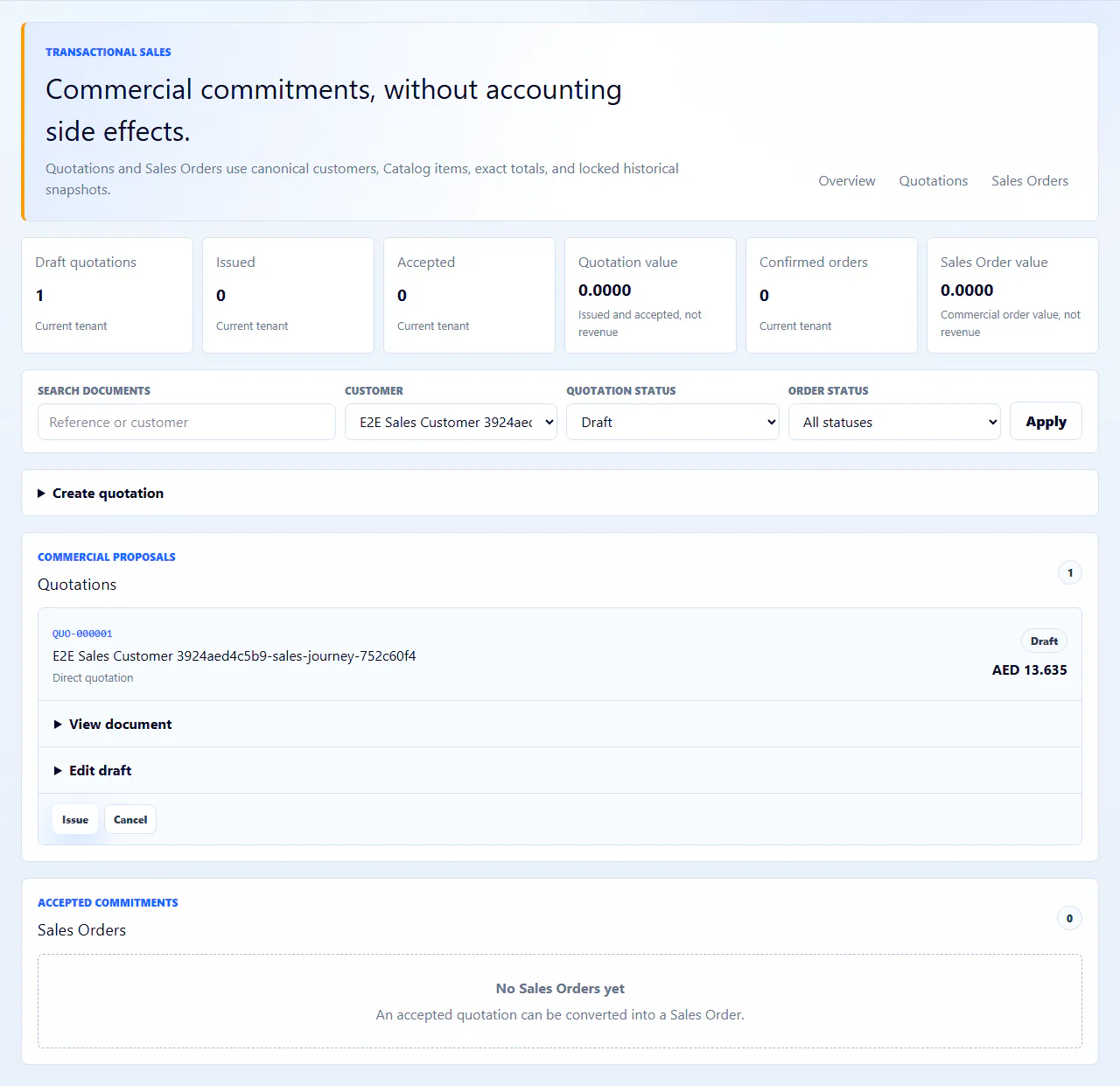 Quote to sales orderCommercial commitments move through explicit lifecycle states.
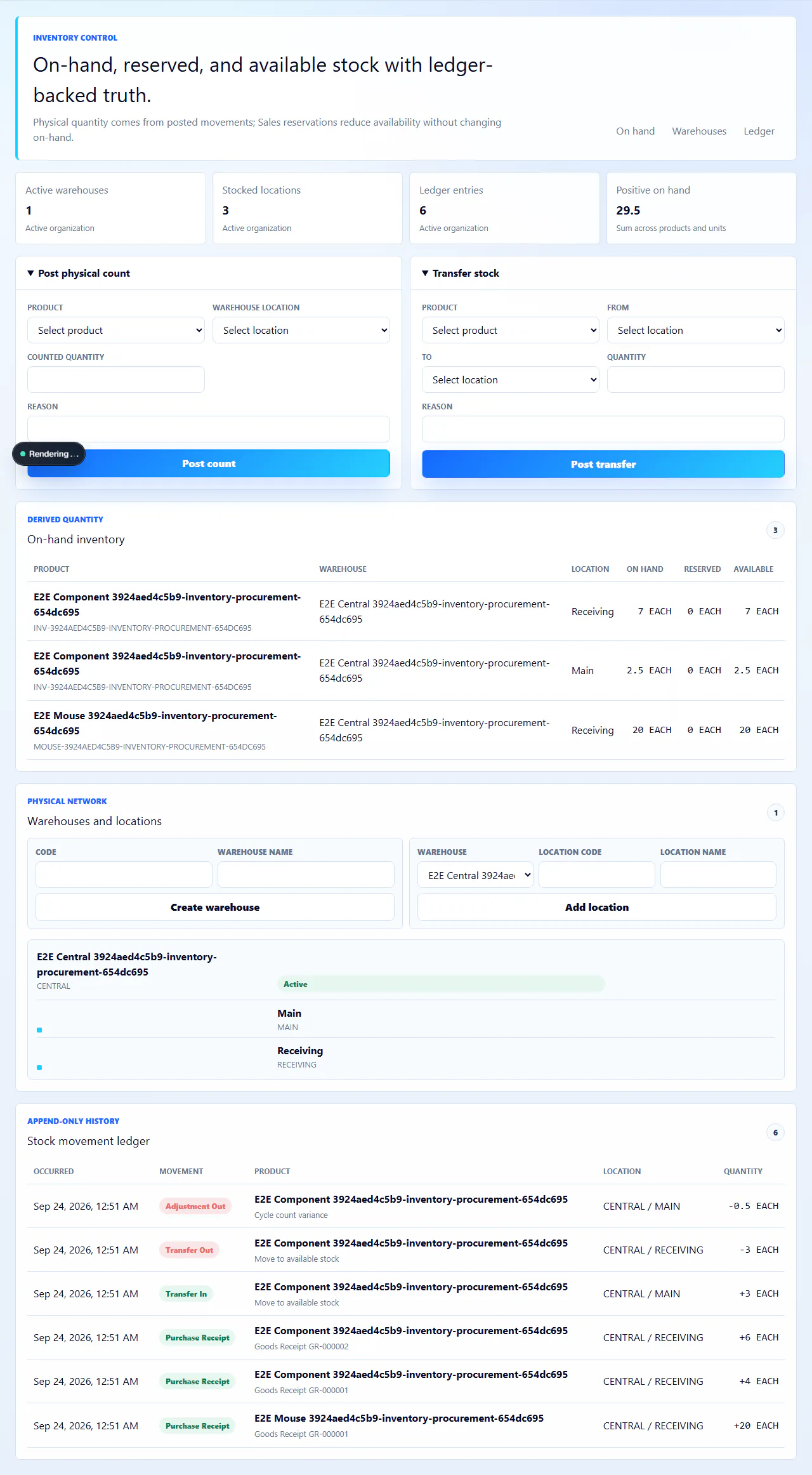 Stock and movementWarehouse balances retain reservation and source-movement context.
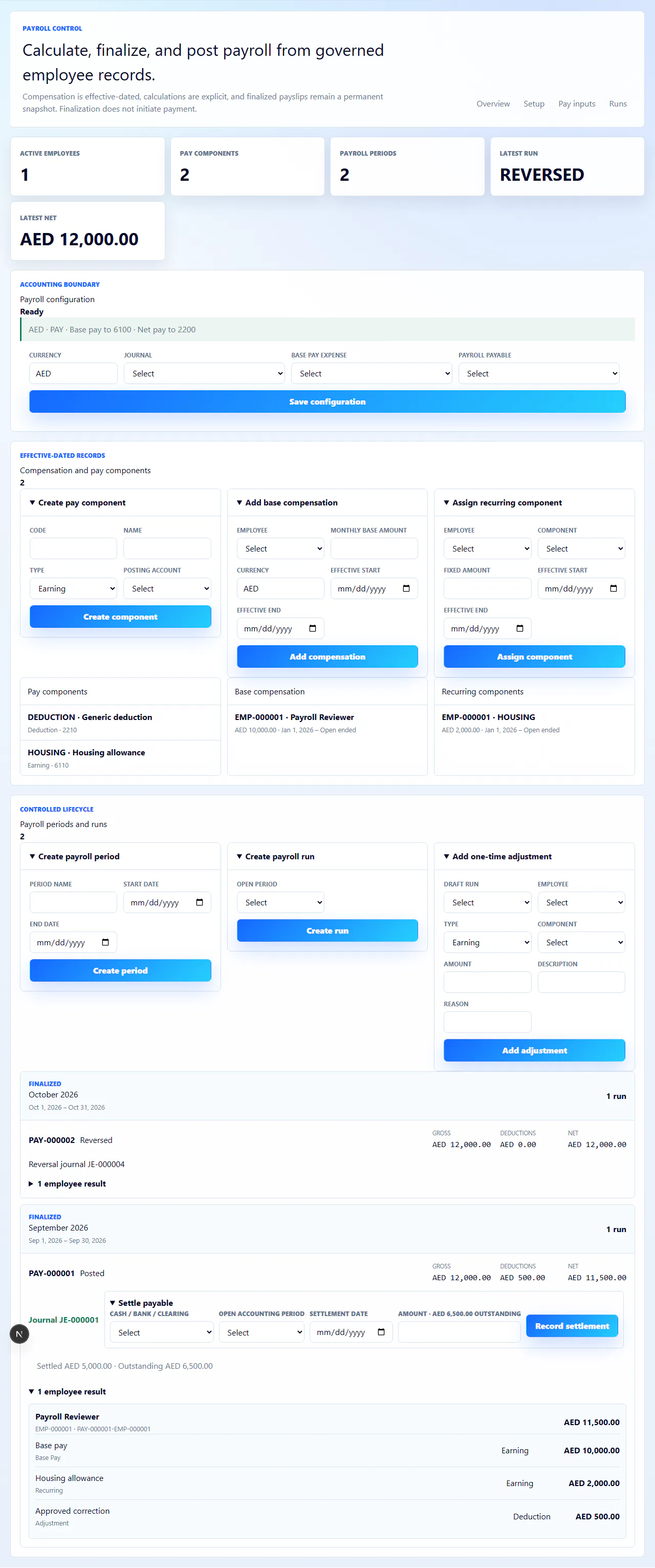 Payroll to FinanceCalculated results move through controlled finalization and posting.
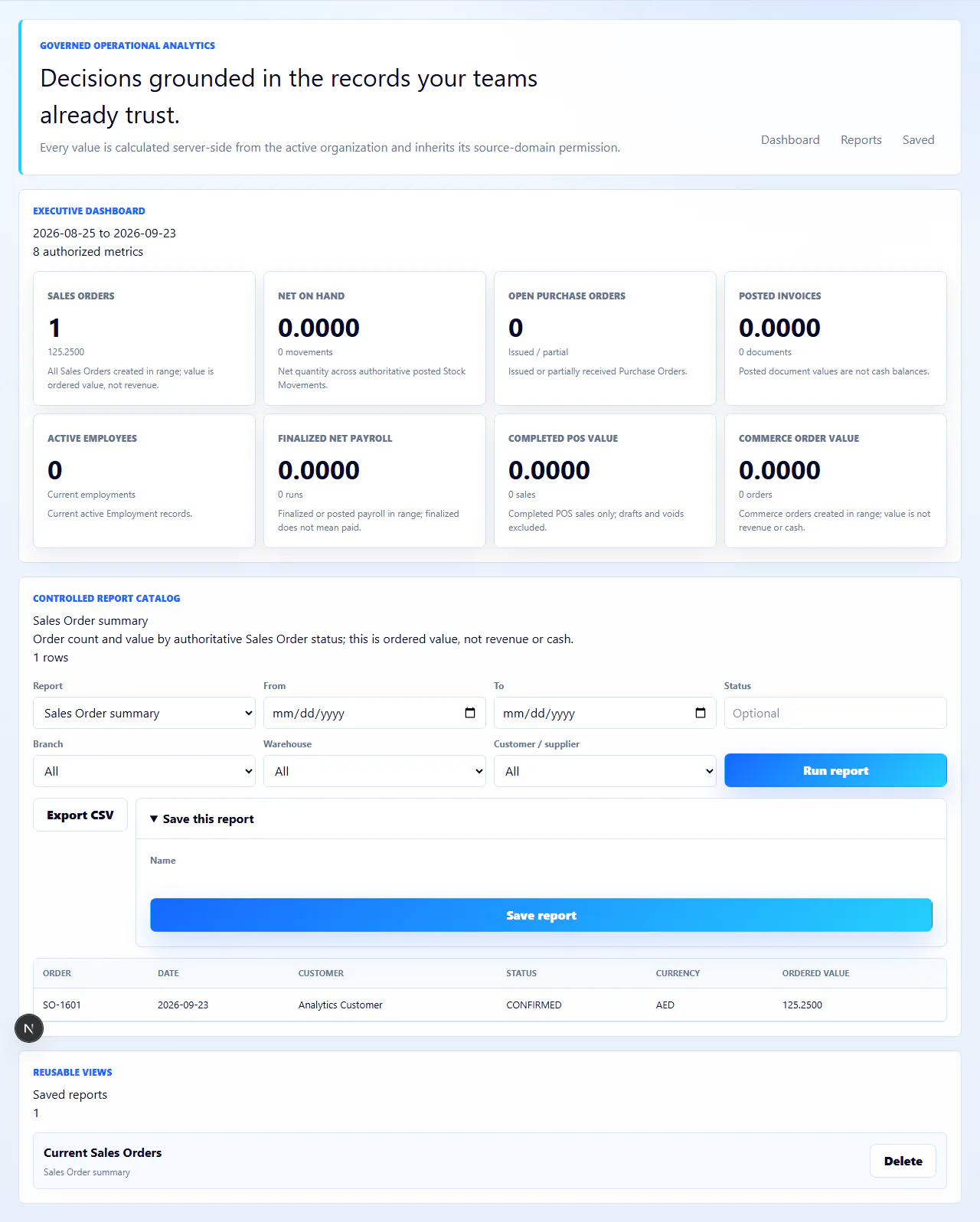 Operational analyticsReports read from the same tenant-scoped source records.
Actual accepted product interface. Illustrative synthetic data.
Built for operators
Zivanox connects the daily records behind commercial, operational, financial, and people decisions.
Review customer demand, stock, financial activity, and team operations from connected source records.
Carry lead and customer context into quotations, orders, and accountable follow-up.
Keep purchasing, warehouse activity, fulfillment, and reporting close to customer commitments.
Maintain employee, attendance, and leave context for governed payroll workflows.
Distinguish on-hand, reserved, received, shipped, and available quantity.
Trace operational records into AR/AP, journals, reconciliation, and reporting.
Controlled launch scope
The first cohort focuses on manageable trading operations. A fit review confirms each required workflow before any invitation or tenant setup.
Internal software validation covers a bounded up-to-10-counter scenario. Physical scanner, printer, cash-drawer, and live-store validation are still pending; this is not a hardware certification or production SLA.
Controlled access
Zivanox is currently available only through a controlled Closed Beta process. Tell us which operational workflow you need to connect.